
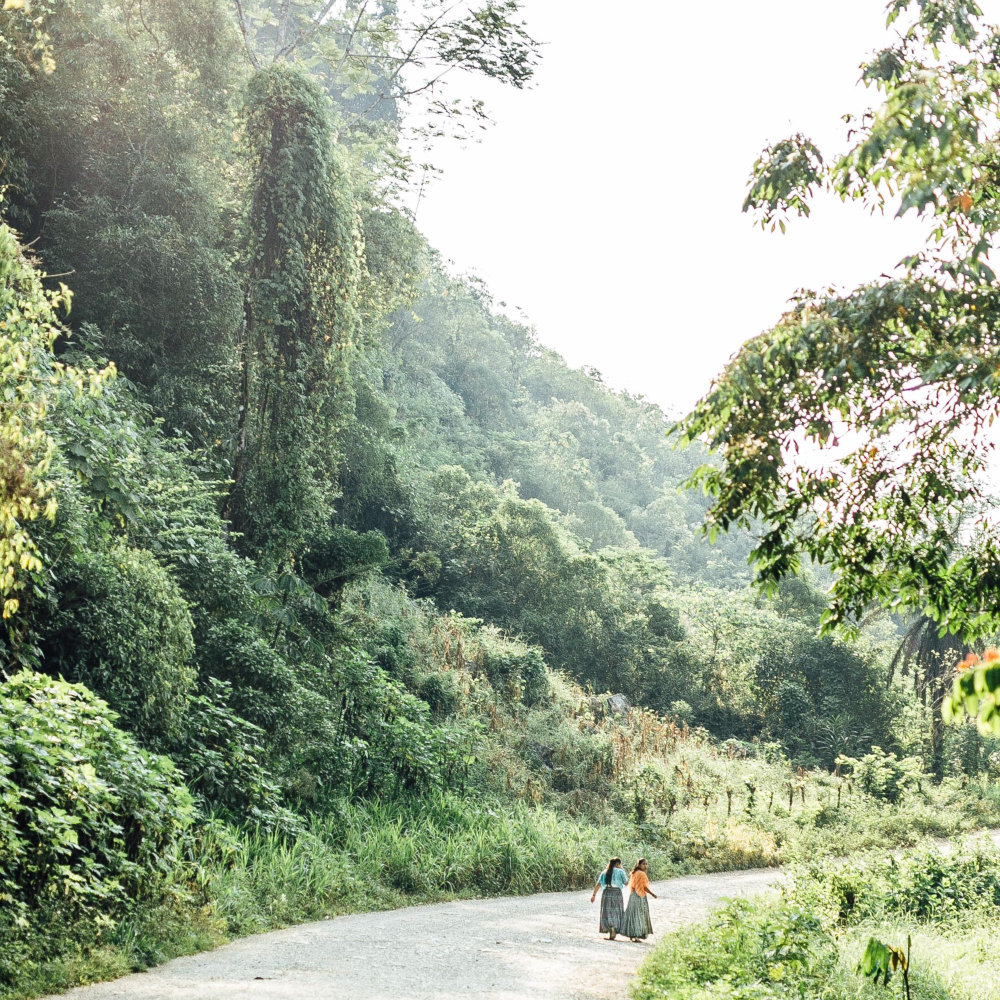
Sourcing
It all starts with sourcing the best possible cacao. We want to build long term relationships with passionate people who can provide us with exceptional cacao and who shares our strive for ecological, economical, and social sustainability.
That means that we want our cacao to be:
- Certified Organic
- Single Origin, ie from one specific region, cooperative or estate
- Fine flavor quality
- Unique in its taste profile
It also means that we want the farmers to be paid more than the commodity market price. This is important as it enables the farmers to reinvest their money and develop their farms, as well as their local community. Keeping a high and stable quality for future harvests, as well as improving the lives of those working with cacao.
Currently we are working together with Biji Kakao, Crafting Markets, Original Beans, Silva Cacao, and Uncommon Cacao when we source our cacao. Click here to read more about each specific origin.
Sorting & Roasting
Sorting: When receiving the cacao beans we first do an initial inspection to ensure that the beans have been well handled during transport. We also taste the beans to ensure that they are consistent in quality and flavor.Before roasting can begin we hand-sort the beans of each batch and remove any defect beans that could otherwise effect the flavor negatively.
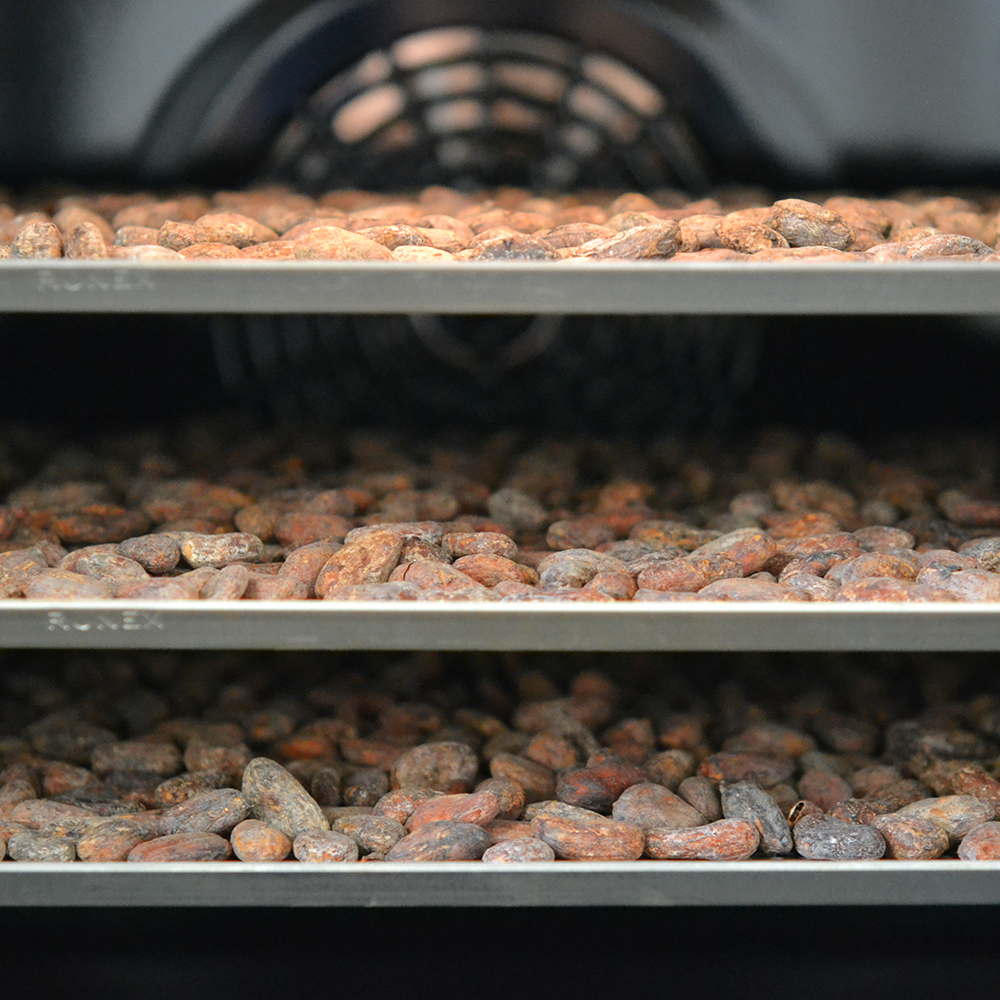
Roasting: This is the moment when we start to develop the unique taste profile of each origin. When we get our hands on a new and exiting origin we explore a lot of different roasting profiles to find the perfect one that brings out the best of each harvest.
As we buy cacao beans of high quality, we wish to preserve every origins individual taste profile as much as possible when making the chocolate. Therefore, we slow-roast at low temperature to develop each origin in its own unique way. A good roast will develop the complexity of flavors while keeping it in balance, giving a long and clean aftertaste.
Cracking & Winnowing
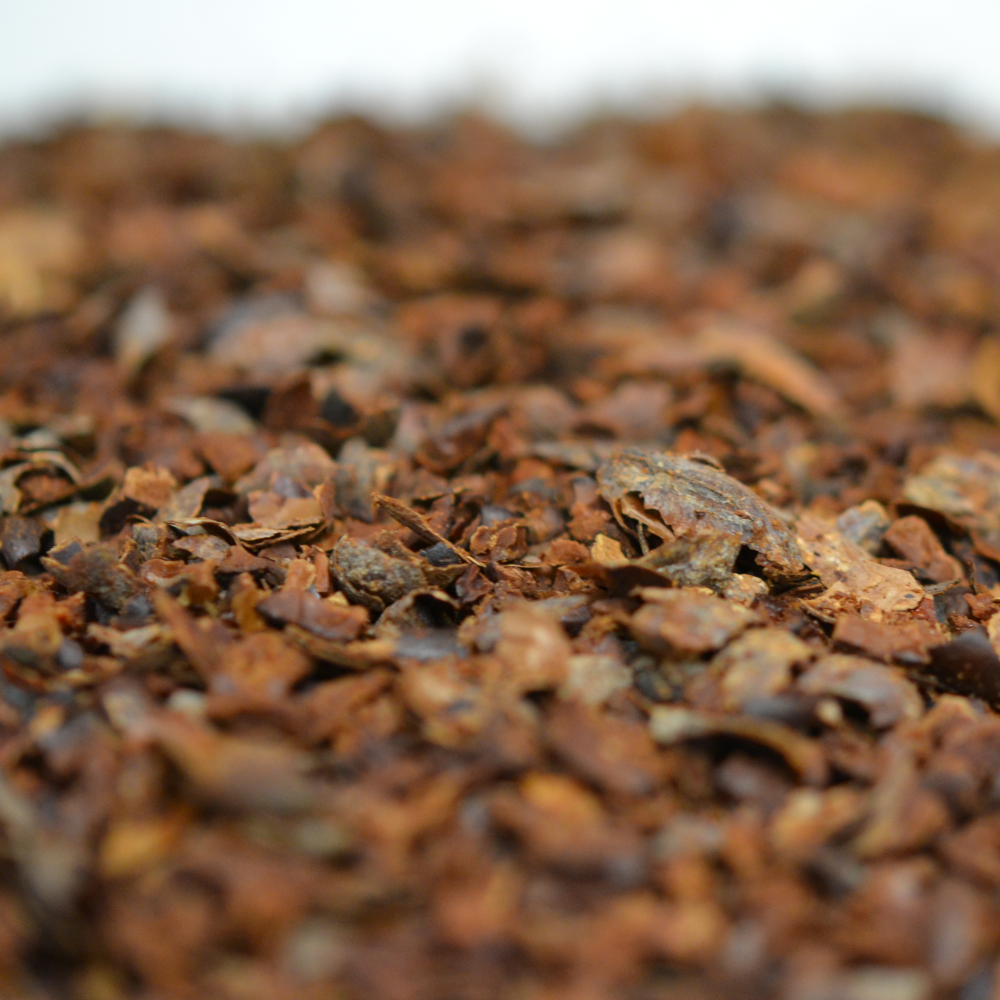
Cracking: The roasting helps loosen the husk from the nib, making it easier to crack the bean open. Once done we have a mix of husk and nibs.
Winnowing: Next step is to separate the husk from the nibs. We achieve this by running the mix of husk and nibs through a machine that uses vaccum to seperate the lighter husk from the heavier nibs. It is very important that all the husk is removed, as it otherwise can effect the flavor. The nibs are collected and are now ready to be used to make delicious chocolate!
Grinding, Mixing & Refining
Now starts the process of grinding the cacao nibs into cacao liquor, adding sugar and further refining the mix into cacao mass. For this we use a granite stone grinder. The friction between the granite stone wheels and the granite stone base generates heat, which causes the cacao fat to melt, and the cacao mass becomes liquid.This is the most time consuming step in the process, as it takes several days to grind the nibs and sugar into the partical size we want in our chocolate. Also, this process helps to drive off unwanted acidity, and develop the natural flavors of the cacao.
Having the right partical size is crucial in achieving that silky smooth mouthfeel. Having a partical size larger than 30 microns will make the chocolate feel gritty on the tongue. On the other hand, we do not want to over-refine as this can reduce the complexity of the flavor profile.
There is a lot of tasting involved in this step to get the texture and flavor profile just right.


Tempering, Molding & Packing
Tempering: After many days of refining we finally have great tasting chocolate. By tempering the chocolate we also ensure that it has a nice shine, snaps when you break it, and does not melt as you are trying to pick it up.
In short; tempering is all about arranging the crystal structure of the cacao fat in a certain way. This is done by first melting the chocolate, then cooling it slightly, and finally heating it up again. The temperature for each step depends on the specific type of chocolate we are making.
Molding: When the chocolate is tempered we pour it into molds, vibrate the molds gently to eliminate as many air bubbles as possible, and finally let it cool down until set.
Packing: As the last step in the process we unmold the chocolate bars and wrap them by hand in our signature, biodegradable, packaging.
Now the chocolate is ready to be shipped!